HamSCI 2026
Workshop Agenda, Presentations, Posters
YouTube Playlist - Presentation Videos - by ARRLHQ
Program
The 9th annual HamSCI Workshop is upon us! Join us at Central Connecticut State University and the American Radio Relay League (ARRL) Headquarters in Newington, CT on March 14-15, 2026. We're excited to welcome you to this fast-growing meeting. Organizers have worked hard to put together a memorable two-day event.
This year's theme, "Discovering Science Through Ham Radio", celebrates the community's achievements, including Personal Space Weather Station deployments, meteor scatter propagation studies and the promotion of WSPR as a propagation sensing tool. The workshop is expected to feature more than 50 poster and oral presentations, plus invited tutorials, and a banquet with a keynote address by a prominent member of the community.
The program will focus on the latest findings, strategies, and best practices in ionospheric science. It has been designed to bring together the amateur radio and professional science communities. Anyone with an interest in these subjects is welcome to attend. Most speakers and attendees will participate in-person. A virtual option is now available.
Connect and share ideas with scientific industry leaders, peers, experts, and partners. Learn about the latest insights and best practices across different segments of ionospheric science. Get an in-depth look at what is coming next. Click on the 'Workshop Agenda' button above for details.
Venue, tours of ARRL, airport and hotel details appear below.
Saturday Keynote: Dr. Marc Kuchner, "How I Almost Went to Jail"
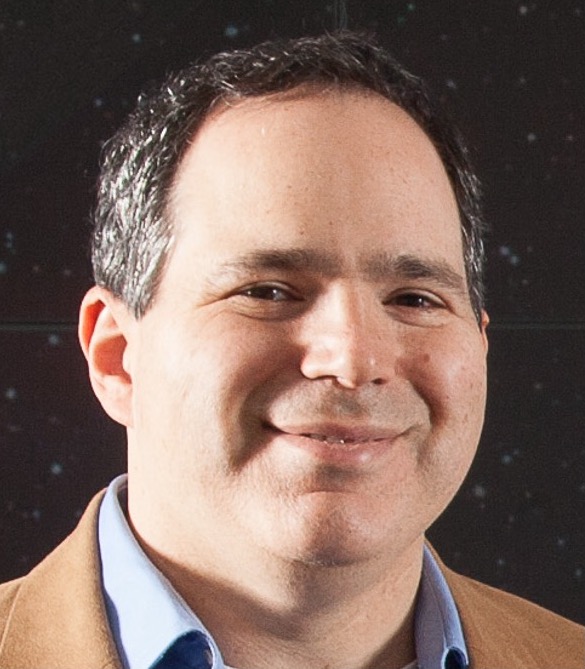
Abstract: Don’t do what I did. But I think science is just about the best possible reason for getting into trouble. I’ll tell you some stories of how I got hooked on scientific mischief and sharing the experience of scientific research with the world.
Biography: Dr. Marc Kuchner is an astrophysicist and the Citizen Science Officer for NASA’s Science Mission Directorate. He oversees a portfolio of 38 NASA-funded participatory science projects, involving millions of volunteers. Marc received his bachelor's degree in physics from Harvard and his Ph.D. in astronomy from Caltech, then studied at the Harvard-Smithsonian Center for Astrophysics as a Michelson Fellow and at Princeton University as a Hubble Fellow. Kuchner is also known for his optical inventions, which are used the Webb space telescope.
Invited Amateur Tutorial: Dr. Rob Suggs NN4NT, "Meteor Scatter Tutorial"
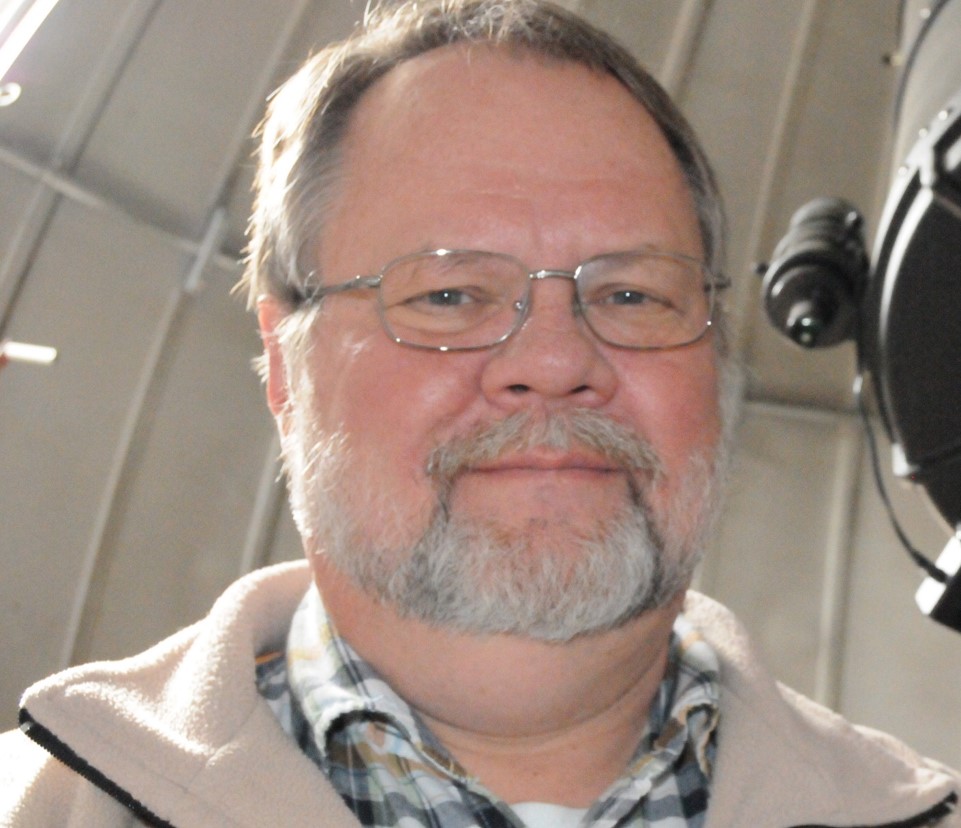
Abstract: Science goals of the Meteor Scatter QSO Party (MSQP) include testing the wavelength dependence of the amplitude and duration of the scattered meteor signals. This tutorial will describe the characteristics of the meteor “pings” and how they vary with wavelength of the radio frequency signals. The sources of the meteoroids, their physical characteristics, and the importance of scattering geometry will be described. The use of the WSJT-X MSK144 mode for meteor scatter communications and collection of data during the MSQP will also be discussed.
Biography: Dr. Suggs recently retired from NASA’s Marshall Space Flight Center in Huntsville, Alabama. He worked for 20 years as Space Environments Team Lead responsible for specifying the meteoroid, orbital debris, plasma, ionizing radiation, thermal and lunar surface environments for various NASA programs including Artemis and International Space Station. He also worked at Johnson Space Center in Houston in the Space Station Program Office responsible for space environments and effects and external payloads. His PhD research was on Saturn’s atmosphere during the Voyager missions. His work on meteoroids includes supporting NASA’s Meteoroid Environment Office and instituting the Lunar Meteoroid Impact Monitoring Program. Rob is an active member of the Marshall Space Flight Center ARC NN4SA.
Invited Scientist Tutorial: Dr. Kuldeep Pandey, "Solar Eclipse Through Ham Radio: What the Bands Revealed"
Abstract: Hundreds of amateur radio operators (hams) collaborated to monitor the impact of the April 2024 Total Solar Eclipse on radio communications. By integrating ham radio logs with PHaRLAP ray-trace modeling, we analyzed how the eclipse altered radio propagation and the Earth’s ionosphere. Our results demonstrate that the eclipse affected radio links variably across different frequency bands (1.8, 7, and 28 MHz) and propagation paths throughout North America and over the Atlantic Ocean to Europe. By combining real-world observations with simulations, we validated ionospheric model predictions (such as SAMI3) regarding eclipse-driven changes. These findings refine our understanding of how solar eclipses modulate the ionosphere and global radio communications.
Biography: Dr. Kuldeep Pandey obtained his PhD in 2019 from the Physical Research Laboratory in India. His doctoral and early postdoctoral works focused on electric fields, currents, and plasma distributions in the low-latitude ionosphere. In November 2020, Kuldeep joined the University of Saskatchewan–Canada as a Postdoctoral Fellow, where his research focused on HF radio polarization using ePOP satellite datasets and modeling. Since April 2024, Kuldeep has been a Postdoctoral Research Associate at the New Jersey Institute of Technology (NJIT). His current work focuses on understanding the effects of the April 2024 solar eclipse on the ionosphere and HF radio propagation using observations from ham radio, ground- and satellite-based instruments, and ray-trace modeling.
Workshop Dedication: In Memory of Paul Nicholson, G8LMD
This year's workshop is dedicated to Paul's memory (he passed away on 12 August 2025), as he was truly one of the greats in VLF work. Hardware, software, education, Paul could do it all. Rest in peace, friend.
Memorial Talk: "Remembering and Honoring Paul Nicholson G8LMD: Passionate VLF Enthusiast and Master" by Jonathan Rizzo KC3EEY

Abstract: Paul Nicholson G8LMD (pictured), was a passionate very low frequency (VLF) enthusiast, engineer, software author, amateur radio operator, and all around curious, intelligent, kind, and helpful person. The HamSCI VLF project is only possible because of Paul's numerous contributions to the VLF Community. Jonathan followed Paul's projects very closely since 2013 and considers him his VLF "Elmer". To Jonathan, Paul was a rock star. Not only does Jonathan remember and honor Paul, but he also intends to continue Paul's amazing work through deploying a network of HamSCI Whistler Catcher VLF Reception Systems. These systems will make observations of VLF phenomena, QSOs with VLF amateur transmissions, and lightning stroke locations solutions for the HamSCI Lightning Detection Network and the Indian Lightning Detection Network (ILDN). The ILDN was a project close to Paul's heart. Paul became a silent key on 12 August 2025 after a courageous battle with cancer that he approached with stoicism and strength. The HamSCI Whistler Catcher VLF Reception System is dedicated to Paul's memory and honor.
Biography: Paul Nicholson G8LMD [SK] was a passionate VLF enthusiast, engineer, software author, amateur radio operator, and all around curious, intelligent, kind, helpful, and wonderful person and husband. Paul put his heart, soul, and brilliant mind into everything he did. Pioneering VLF natural radio reception techniques which include his E-field and orthogonal H-field VLF receivers at his home in the countryside of Todmorden, UK, and his absolutely amazing vlfrx-tools software, containing 48 individual, scriptable, utilities for the application of data acquisition, timing, and signal processing of VLF natural radio emissions, sferics, VLF transmitters, VLF amateur radio reception, and VHF meteor scatter. His other software contributions include lcnetgen, a distributed capacitances and inductances calculator useful when setting up VLF receivers, and EbNaut, the very first digital amateur radio mode for the 8290 and 5170 Hz bands. Paul's academic contributions include many natural radio emissions and man-made observations in the VLF band, collaboration with researchers on various topics including Q bursts, and his most ambitious project, the Indian Lightning Detection Network (ILDN), India's first domestic lightning location network run by Tripura University and other collaborating universities in India, which uses a VLF reception system he designed based on his E-field VLF receiver and utilizes vlfrx-tools which provides live lightning stroke data that saves countless lives. Paul also was selflessly involved in other endeavors, including serving as the chairman of the board and treasurer of the Gaddings Dam group whose purpose is to maintain and preserve Gaddings dam in Todmorden. Paul also loved dogs and served as a dogsbody (being a dogsbody involves hiding yourself in inconspicuous places outside to train the search and rescue dogs) for the Calder Valley Search and Rescue Team.
Speaker's Biography: Jonathan Rizzo KC3EEY is an electrical engineer and a graduate of the University of Scranton and Luzerne County Community College. Jonathan became extremely interested in very low frequency (VLF) phenomena in 2013, both in the technical aspect of observation techniques, but also the physics. He has been an advocate of VLF study ever since.
Abstract Submission/Poster and Presentation Templates
The abstract submission window has closed. Thanks to all who submitted.
If you submitted an abstract, and you have received notice from the Workshop Committee that it has been accepted as a talk or as a poster, you may wish to download and use the HamSCI templates (if your organization does not have its own standard templates): https://doi.org/10.5281/zenodo.18623265. The link will provide both Microsoft Power Point and LaTeX beamer templates.
Venue Details
- The 2026 HamSCI Workshop is being held at Central Connecticut State University (CCSU) – Student Center, 105 Ella Grasso Blvd, New Britain, CT 06053. See virtual campus map.
- The Workshop talks and poster sessions will take place in Alumni Hall, inside the CCSU Student Center.
- Saturday night’s Banquet will take place at CCSU’s Constitution Room inside Memorial Hall, just across the way on-foot from the Student Center. Use the same parking (Welte Lot) as the workshop, but walk to Memorial Hall -- see campus map PDF).
Tours of ARRL
- Tours will be of ARRL, The National Association for Amateur Radio® and W1AW, will be held on Saturday, from 2 to 5 PM.
- Late night W1AW operating hours have been arranged - so join us after the banquet on Saturday night.
- Full details will be announced at the Workshop.
Airport Information
Bradley International Airport in Windsor Locks, Connecticut, is the airport closest to CCSU. Other international airports near Central Connecticut State University:
- 26 miles: Hartford, CT (BDL) Bradley International Airport
- 103 miles: New York, NY (LGA) LaGuardia Airport
- 110 miles: New York, NY (JFK) John F. Kennedy International Airport
- 111 miles: Boston, MA (BOS) Boston Logan International Airport
- 123 miles: Newark, NJ (EWR) Newark Liberty International Airport
Hotels
There are many options for lodging at area hotels.
Courtyard by Marriott Hartford Farmington (2.3 miles away)
1583 Southeast Road, Farmington, CT 06032
Group reservation link for HamSCI 2026: Mariott Hartford Farmington (or call 1-860-521-7100)
Residence Inn by Marriott Hartford Rocky Hill (13 miles away)
680 Cromwell Avenue Rocky Hill, CT 06067
Group reservation link for HamSCI 2026: Marriott Hartford Rocky Hill (or call 1-860-257-7500)
Organizing Committee
- Dr. Nathaniel Frissell, W2NAF, The University of Scranton
- Dr. Hyomin Kim, KD2MCR, New Jersey Institute of Technology
- Dr. Gareth Perry, KD2SAK, New Jersey Institute of Technology
- Bob Inderbitzen, NQ1R, ARRL
- Gary Mikitin, AF8A, HamSCI
- Ed Efchak, WX2R, HamSCI
Partners Supporting HamSCI 2026
Major support for the HamSCI Workshop 2026 is provided by NSF Grant 2517208 to the New Jersey Institute of Technology.